
Super City2:Tut Life World
Hainan Hengdou Network Technology Co., Ltd.Role Playing
4.5111.00 Reviews
- Version
- 1.0.48
- Installs
- 10.00M
- Age Rating
- Everyone
Screenshots
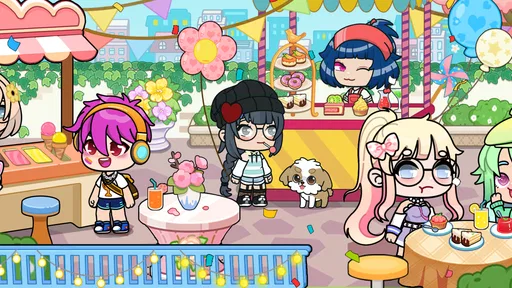

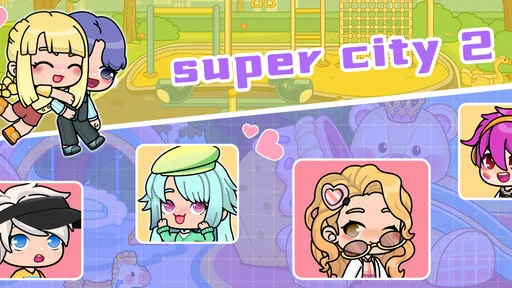
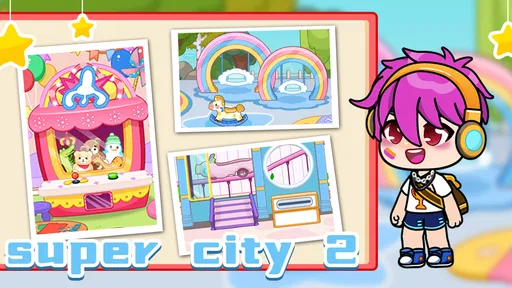

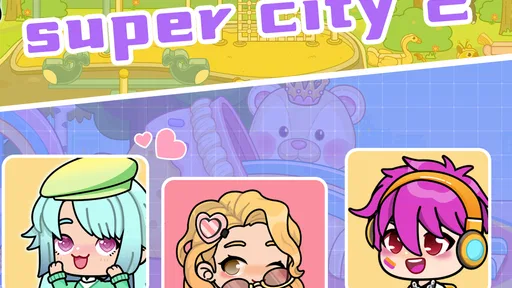
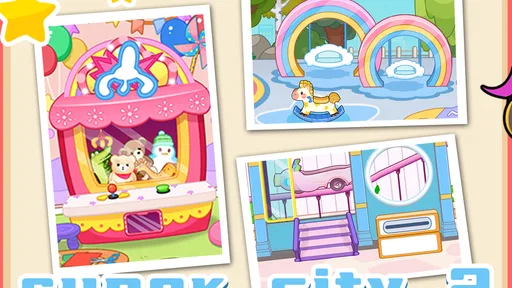
Our Review of Super City2:Tut Life World
 Analysis by Appyee
I spent time with Super City2:Tut Life World to understand what it feels like beyond its short store description. This is a free role-playing game from Hainan Hengdou Network Technology Co., Ltd. built around the idea of shaping a small personal world: a house, a hospital, a school, and the surrounding life that connects them. The main appeal is not a difficult quest line or a competitive battle system. It is the freedom to arrange everyday places and create your own little stories.
That focus makes it an unusual fit for players who enjoy imaginative play more than winning. I found myself treating the game almost like a digital dollhouse, moving between locations and deciding what should happen next. It is simple to begin, suitable for Everyone, and available at no upfront cost, although optional purchases range from $0.99 to $19.99 per item. The game has reached over 10 million installs and holds a 4.5 average from around 12 thousand ratings, so it clearly has a broad audience.
Building a personal town is the real attraction
I found that the best way to begin is to pick one familiar place and give the session a small purpose, rather than waiting for the game to prescribe a task. That makes the town feel personal from the outset and gives each choice a reason. Next, I’ll look at how the locations themselves help a player notice progress without relying on a conventional quest track.
A role-playing game with no single correct story
The defining capability here is the chance to design and make over several parts of a miniature town rather than being pushed through one fixed adventure. A house can become a family setting, a school can support a classroom story, and a hospital can turn into the backdrop for a completely different scene. I liked that these places are not merely menus leading to separate activities. They give the game a sense of continuity, because my choices about where characters belong affect the story I imagine.
This kind of play is especially approachable for younger users. There is no need to understand a complicated character build, memorize combat controls, or follow a long chain of objectives before the game becomes enjoyable. I could open a location, look around, and start experimenting almost immediately. That low barrier is one of the strongest reasons to try it, particularly if the player prefers arranging scenes and inventing dialogue to collecting victories.
At the same time, I would not describe it as a traditional story-heavy role-playing game. Players expecting deep statistics, demanding battles, or a carefully written campaign may find the experience light. Its role-playing element comes from taking control of situations and characters in a personal way. The freedom to create a scene is more important here than completing a prescribed mission.
Why the town setting matters
The house, hospital, and school theme gives the imagination useful boundaries. A completely empty sandbox can feel overwhelming because it offers too many possibilities. Here, each place suggests a different kind of activity. The house naturally supports routines and family scenes. The school encourages lessons, friendships, and playful classroom situations. The hospital can be used for caring, visiting, or problem-solving stories.
I found this structure more useful than a single decorative room. Moving between locations gives a simple story a beginning, middle, and end. A character can leave home, visit school, and later go to the hospital. Even without a formal script, that journey creates a reason to keep playing. It also means the game can be revisited in short sessions without requiring the player to remember a complex plot.
How I approached the first session
My advice is not to search for a hidden objective during the opening minutes. Instead, choose one location and treat it as a stage. Place the characters where they make sense, inspect the available surroundings, and then build a small scenario around one event. For example, I might start with a morning at home, move the action to school, and finish with a visit to the hospital. This approach makes the connected town feel more meaningful than simply tapping through every area once.
A useful trick is to give each character a clear role before moving them around. One can be the parent, another the student, and another the doctor or visitor. That small decision prevents the session from becoming random dragging and dropping. It also makes it easier to return later and continue the same imaginary storyline.
What happens during ordinary play
In practice, the game works best as a sequence of short creative decisions. I look at a location, decide who belongs there, arrange the scene, and then imagine what each character is doing. The enjoyment comes from the combination of place and situation rather than from a scoreboard. A school may feel ordinary one moment and become the setting for a celebration or an unexpected visit the next.
This makes the experience flexible for different ages and moods. A child can use it for open-ended pretend play, while an older player may enjoy designing a calm town and observing how a story develops. I also think it can work as a shared activity between a parent and child. One person can suggest the situation while the other arranges the characters and locations.
There is a trade-off in that flexibility. Because the game does not force a strong direction, a player who needs constant goals may lose interest quickly. I sometimes had to create my own reason to continue. That is not a flaw for the intended style, but it is important to understand before installing it.
A practical everyday scenario
Imagine having ten quiet minutes after school or work. Instead of committing to a long role-playing session, you can open the town and create one contained scene. I would begin at the house, prepare a character for the day, move to the school, and then use the hospital as the final stop in a simple story. Because the session can be based on a single situation, it does not need the preparation or concentration demanded by a large adventure game.
This is also where the locations become more valuable than a collection of unrelated decorations. The town gives a natural route for a short narrative. If I return later, I can change the same route: perhaps the school becomes the main setting, while the house and hospital are used only as supporting locations. Reusing the same spaces in different ways is one of the better ways to avoid exhausting the initial novelty.
Where it differs from familiar alternatives
Compared with a conventional role-playing game, this experience puts much less emphasis on character progression and challenge. There is no need to optimize a team or prepare for a difficult encounter. Compared with a pure building game, it gives the player more social context because the locations suggest daily life and relationships. Compared with a linear children’s game, it offers more room to decide what happens next.
That middle position is both its identity and its limitation. Players looking for a competitive mobile game should choose something built around matches or rankings instead. Players wanting a deep life simulation may prefer a more detailed alternative with stronger progression and management systems. I would recommend this one when the priority is quick, accessible pretend play across recognizable town locations.
Managing the free-to-play side
The game is free to start, which makes trying it straightforward. Optional in-app purchases are present, with individual items priced from $0.99 to $19.99. I would approach those purchases carefully, especially when the game is being used by a child. The most sensible routine is to explore the available town and decide whether the core creative experience is enjoyable before spending anything.
For families, it is worth agreeing on a simple rule before handing over the device: play first, discuss purchases separately. That keeps the creative part from turning into a pressure to buy. Since the game’s main value comes from inventing scenes, a player can often get a better sense of its fit without immediately purchasing extras.
Device expectations and age suitability
The listed minimum operating system is Android 7.0, so the game is aimed at a wide range of Android devices rather than only the newest phones. I would still keep expectations realistic on older hardware. A larger screen is more comfortable for arranging scenes and seeing several parts of a location, while a smaller phone can make detailed interaction feel less relaxed.
The Everyone content rating matches the game’s approachable presentation. That does not mean every child should use it without guidance, particularly because purchases are available. A parent can also improve the experience by playing the first session together and showing how to create a small story instead of simply tapping through locations.
Who will get the most from it
I think the strongest audience is made up of players who enjoy creative control, familiar everyday settings, and short sessions. Children who like pretend play may find the house, school, and hospital easy to understand. Parents looking for a calm game to explore together may appreciate the lack of complicated controls. Adults who enjoy arranging scenes or testing small story ideas can also find it pleasant, provided they do not expect a deep progression system.
The game is less suitable for someone who wants a demanding adventure, a rich character-development system, or a clear sequence of rewards. It may also disappoint players who need constant novelty, because the same locations can require personal imagination to stay interesting. My recommendation is strongest for people who see a game as a creative toy rather than a challenge to master.
My final take after using it
Super City2:Tut Life World succeeds because it understands the appeal of a small, familiar world that the player can reinterpret. The house, hospital, and school are not just a list of settings; together they provide a simple framework for making everyday stories. I enjoyed the freedom, but I also noticed that the game asks me to supply much of the direction myself.
Its current version is 1.0.48, and the large install base suggests that this style has found plenty of interested players. I would recommend giving it a try if you want an accessible role-playing game for imaginative scenes and relaxed sessions. I would skip it in favor of a more traditional adventure if your main goal is combat, progression, or a tightly written campaign. For the right player, though, its biggest strength is turning ordinary places into whatever story you want to tell next.
Verdict
Strengths of Super City2:Tut Life World
- Large collection of locations, characters, and objects to explore.
- Creative role-play encourages storytelling and imaginative play.
- Bright, colorful visuals are appealing to younger players.
- Simple touch controls are easy for children to understand.
- Offline play is useful when traveling or without an internet connection.
Limitations of Super City2:Tut Life World
- Some content may require extra purchases or unlocking.
- The many items and locations can feel overwhelming at first.
- Activities may become repetitive after extended play sessions.
- Performance can vary on older or less powerful devices.
- Parental supervision is recommended for in-app purchase controls.
Other Releases by Hainan Hengdou Network Technology Co., Ltd.
View All
Tut world:Home Town builder
Role Playing4.6
Similar Picks in This Category
View All
Hair Dye
CrazyLabs LTD4.4

Monster High™ Beauty Salon
CrazyLabs LTD4.5

Bus Simulator - Bus Games 3D
Jima Apps4.4

Flight Pilot: 3D Simulator
Wildlife Studios4.1


Super Stylist Fashion Makeover
CrazyLabs LTD4.4
Frequently Asked Questions
What is Super City2:Tut Life World?
Super City2:Tut Life World is a casual role-playing and life-simulation game focused on exploration, customization, and storytelling. Players can visit different locations, create characters, choose outfits, interact with objects, and build their own everyday scenarios. It is designed mainly for creative, open-ended play rather than competition, allowing users to invent stories at their own pace.
Is Super City2:Tut Life World free to download and play?
The game can generally be downloaded without an upfront purchase, but availability and included content may depend on the Android or iOS version. Some locations, items, characters, or cosmetic features may be restricted or offered through in-app purchases. Before downloading, check the store listing for the current pricing model, optional purchases, advertisements, and any device-specific differences.
Does Super City2:Tut Life World require an internet connection?
Many of the core activities in Super City2:Tut Life World may be available offline after the necessary game data has been installed, which is convenient for travel or limited connectivity. However, an internet connection can still be needed for downloading updates, restoring purchases, displaying advertisements, or accessing certain online features. Requirements may vary between versions and devices.
Is Super City2:Tut Life World suitable for children?
Super City2:Tut Life World uses a colorful, cartoon-style presentation and simple interactions that can appeal to younger players. Nevertheless, parents should review the official age rating, advertising behavior, in-app purchase options, and privacy information before allowing children to play. Parental controls and purchase restrictions are recommended, especially if the device is shared or linked to a payment method.
What devices are compatible with Super City2:Tut Life World?
Compatibility depends on the operating system, hardware, and store version available in your region. The game is intended for supported Android and iOS devices, but older phones or tablets may experience slower loading, reduced performance, or installation limitations. Check the official Google Play or App Store page for the latest minimum operating-system requirements and available storage before downloading.
Play our best games!


